
Few figures in English history provoke more debate than King Richard III. Cast by Shakespeare as a scheming tyrant, yet defended by others as a misunderstood and maligned ruler, his legacy remains intensely polarising. Everything changed in 2012 when his remains were discovered beneath a nondescript car park in Leicester—a revelation that rekindled global fascination with his life, death, and the narratives built around him.
To preserve and illuminate that rediscovery, the King Richard III Visitor Centre was established nearby. This distinctive Leicester attraction weaves together history, archaeology, and immersive storytelling to explore the real man behind centuries of myth.
If you’re striving for a travel narrative that bridges historical intrigue and cultural tourism, there’s a parallel in another iconic British destination. Much like the Visitor Centre transforms a site of archaeological discovery into a compelling visitor experience, the renowned Silverstone Circuit has been shaped into a living, roaring tribute to motorsport heritage. You can check out an excellent guide for this legendary racetrack here: Silverstone Circuit Guide: UK’s Iconic Race Track.
Who Was King Richard III?
King Richard III is one of the most debated monarchs in English history. His reign was brief, lasting just over two years, yet his life and legacy continue to spark fascination and controversy. From his early years during the Wars of the Roses to his death on the battlefield, Richard’s story reflects both the brutality and intrigue of medieval England.
Early Life and Path to the Throne
- Born in 1452 at Fotheringhay Castle, Richard was the youngest son of Richard, Duke of York, and Cecily Neville.
- He spent much of his youth amidst the turmoil of the Wars of the Roses, which pitted the houses of York and Lancaster against one another.
- His loyalty to his elder brother, Edward IV, brought him significant power and influence, particularly in the north of England.
- After Edward IV’s sudden death in 1483, Richard was named Lord Protector for his 12-year-old nephew, Edward V.
- Within months, Edward V and his brother were declared illegitimate, and Richard took the crown, becoming King Richard III.
Role in the Wars of the Roses
- Richard’s reign was part of the ongoing struggle between Yorkists and Lancastrians.
- The disappearance of his nephews—the “Princes in the Tower”—remains one of the most enduring mysteries in English history.
- Although evidence is inconclusive, many contemporaries and later historians accused Richard of orchestrating their deaths to secure his throne.
- His rule was also marked by efforts to strengthen the justice system and implement reforms, but his reputation was overshadowed by suspicion and unrest.
The Battle of Bosworth (1485)
- Richard’s claim to the throne was challenged by Henry Tudor, a Lancastrian exile.
- On August 22, 1485, their forces clashed at the Battle of Bosworth in Leicestershire.
- Richard fought bravely, reportedly refusing to flee even as the tide turned against him.
- He was killed in the fighting, becoming the last English king to die in battle.
- His defeat ended the Plantagenet dynasty and ushered in the Tudor era with Henry VII’s victory.
Controversies and Reputation
- Richard III’s image has been shaped heavily by William Shakespeare’s play, which portrays him as a deformed, ruthless villain.
- For centuries, this depiction defined popular opinion, casting Richard as one of England’s great tyrants.
- Modern historians, however, have re-examined his reign, highlighting his administrative reforms and questioning the truth behind Tudor propaganda.
- The discovery of his remains in 2012 sparked fresh debate, especially after analysis revealed scoliosis rather than the hunchback described by Shakespeare.
Why His Story Still Matters
- Richard III’s life and death embody the turbulence of medieval politics, where loyalty, betrayal, and ambition determined the fate of kings.
- His controversial legacy continues to inspire historians, writers, and visitors eager to separate fact from fiction.
- The ongoing reinterpretation of Richard’s character shows how history is never static, but constantly reshaped by new evidence and perspectives.
Inside the King Richard III Visitor Centre
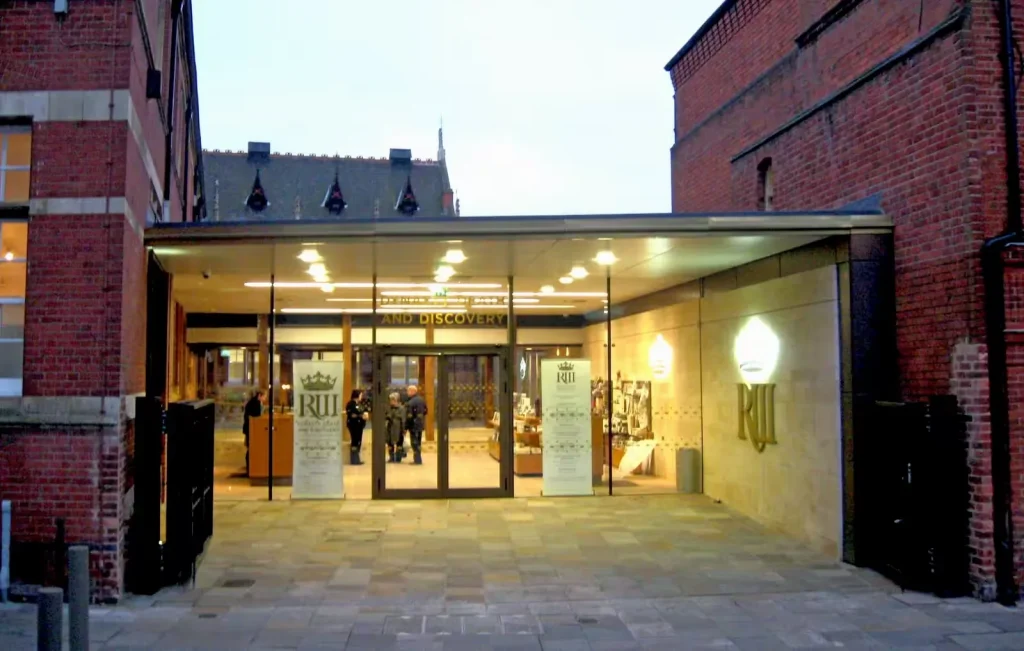
Walking into the King Richard III Visitor Centre in Leicester feels like stepping into both a history book and a modern science lab. It’s not just a museum; it’s an experience carefully designed to weave together archaeology, storytelling, and interactive technology. The layout takes you on a chronological and emotional journey—from Richard’s rise to the throne, to his fall at Bosworth, to the astonishing rediscovery of his grave beneath a Leicester car park in 2012.
Exhibit Layout – How the Journey Unfolds
The Visitor Centre is split into three main zones, each with its own focus:
- Richard’s Life and Times – Background on medieval England, Richard’s family, the Wars of the Roses, and his contested claim to the throne.
- The Search for the King – The modern archaeological excavation, complete with scientific discoveries and DNA testing.
- The Car Park Grave Site – The exact spot where Richard’s remains were found, preserved beneath a glass floor.
This clear organization allows visitors to follow the narrative from history to rediscovery, blending drama with science in a way that appeals to both history buffs and casual visitors.
Key Highlights
1. Interactive Timeline of Richard III’s Life
- A wall-length digital timeline maps Richard’s journey from his birth in 1452 at Fotheringhay Castle to his coronation and eventual death in 1485.
- Touchscreens allow you to dive deeper into key events, with portraits, medieval manuscripts, and short videos adding context.
- Family trees highlight the tangled web of York and Lancaster relations, crucial for understanding the Wars of the Roses.
2. Battle of Bosworth Exhibit
- This gallery recreates the pivotal battle where Richard met his end.
- A combination of sound effects—clashing swords, war horns, galloping horses—immerses you in the chaos of combat.
- A large digital map shows troop movements, while animated projections illustrate how betrayal on the battlefield sealed Richard’s fate.
- Artifacts, such as replicas of weaponry and armor, add a tactile layer for visitors.
3. DNA and Forensic Science Section
- Styled like a forensic lab, this section explains how scientists confirmed the skeleton’s identity.
- Displays show how mitochondrial DNA from Richard’s sister Anne of York was matched with living descendants.
- Forensic analysis reveals the multiple injuries Richard suffered at Bosworth, including the fatal head wounds.
- A spine model highlights the scoliosis that gave Richard a curved back, dispelling myths about a grotesque “hunchback.”
4. 3D Facial Reconstruction of Richard III
- Using CT scans of the skull, experts reconstructed Richard’s face, which is now displayed in lifelike detail.
- The model challenges Shakespeare’s “deformed villain” image, instead showing a young man with fine, sharp features.
- Visitors often describe this as one of the most moving exhibits, as it literally puts a face to a centuries-old story.
5. The Grave Site – Where History Emerged
- Perhaps the most haunting part of the centre is the preserved grave site itself.
- A glass floor reveals the very spot where Richard’s remains were uncovered, curled awkwardly in a shallow grave.
- Subtle lighting and respectful interpretation panels emphasize the human side of the discovery.
- Standing above the grave creates a powerful connection with history, reminding visitors that this was once a living, breathing king.
6. Multimedia Experiences
- Virtual Reality stations let you “walk” through medieval Leicester and even experience the Greyfriars friary before its destruction.
- Digital storytelling booths narrate events from multiple perspectives—Richard himself, a friar, or a soldier at Bosworth.
- Soundscapes shift from medieval chants in the friary to the sounds of the battlefield, creating atmosphere in every zone.
7. For Families & Children
- Younger visitors aren’t left out—hands-on exhibits include:
- A mini archaeological dig where kids can “excavate” replica artifacts.
- Puzzle trails and interactive quizzes to guide them through the exhibits.
- Dress-up areas with medieval cloaks, crowns, and armor.
- A mini archaeological dig where kids can “excavate” replica artifacts.
- Storytelling sessions and craft workshops run on weekends and school holidays, making the centre a genuine family attraction.
8. Accessibility and Design
- The building is fully wheelchair-accessible with lifts and wide corridors.
- Audio guides and large-print text panels cater to visitors with visual or hearing impairments.
- Tactile exhibits and 3D models ensure inclusivity for a range of learning styles.
- Quiet spaces are available for those needing a break from sensory stimulation.
Why It Stands Out
The King Richard III Visitor Centre isn’t just a museum of relics—it’s a storytelling hub where archaeology meets drama. It connects Leicester’s medieval past with its present, offering a powerful reminder that history often lies just beneath our feet. The combination of exhibits—the Richard III grave, cutting-edge forensic science, and engaging multimedia—makes this one of the most unique Leicester history museums.
Much like the way Leicester’s National Space Centre transforms the mysteries of the cosmos into a visitor-friendly adventure (see Discover the Wonders of the National Space Centre), the Richard III Centre takes a centuries-old historical enigma and makes it tangible, memorable, and accessible for all.
Leicester Cathedral and Richard III’s Reburial
When the remains of King Richard III were uncovered in 2012, one of the most pressing questions became: where should England’s last Plantagenet king be laid to rest? After much public debate, it was decided that his reburial would take place in Leicester Cathedral, just a few steps from the site of his discovery. In March 2015, over 500 years after his death at the Battle of Bosworth, Richard was finally given a ceremony and tomb befitting a monarch.
Why Leicester Cathedral?
- Richard’s remains were found in Leicester, within the grounds of the long-lost Greyfriars friary.
- While some argued he should be buried in York Minster, reflecting his strong ties to the north, the High Court ultimately ruled Leicester was the most appropriate place.
- This decision was also rooted in practicality: the excavation, identification, and conservation of his remains were carried out in Leicester, making the city central to his rediscovery story.
The Tomb and the Ceremony
- Richard’s tomb, designed by architects van Heningen and Haward, is made from pale Swaledale fossil stone, topped with a polished Kilkenny marble slab. A simple cross is carved deeply into its surface, reflecting solemn dignity rather than grandeur.
- The reburial service in March 2015 lasted several days, blending historical pageantry with religious solemnity.
- His coffin was crafted from English oak, lined with lead, and carried through the streets of Leicester in a public procession witnessed by thousands.
- The service, led by the Archbishop of Canterbury, included both Anglican rites and Catholic prayers, acknowledging the divided religious landscape of Richard’s own time.
Cultural and Religious Significance
- The reburial was not simply about honouring a long-dead king—it was about reconciling history with memory.
- For centuries, Richard’s image had been tarnished by Tudor propaganda and Shakespeare’s portrayal. The respectful ceremony marked a turning point, offering dignity and closure to a monarch long denied it.
- It also carried religious importance: Richard was a devout Catholic, and his final resting place in consecrated ground restored a spiritual completeness to his story.
Pilgrimage for History Lovers
- Today, Richard’s tomb has become a site of pilgrimage for history enthusiasts, Ricardians, and curious visitors from across the globe.
- The cathedral provides a quiet, reflective space, contrasting with the more interactive storytelling at the King Richard III Visitor Centre nearby.
- Together, the two sites form a unique cultural journey: the Visitor Centre explores the king’s life, death, and rediscovery, while the cathedral offers the solemnity of his final resting place.
Connection Between the Visitor Centre and Cathedral
The relationship between the two sites is essential. Visitors often begin at the Visitor Centre, where they learn the details of Richard’s reign, his dramatic death at Bosworth, and the extraordinary archaeological discovery. They then move on to the Cathedral, where the story concludes in reverent silence before Richard’s tomb. This seamless connection between education and commemoration ensures that Richard III’s legacy is not only studied but also honoured.
Planning Your Visit to the King Richard III Visitor Centre in Leicester: Tickets, Tours & Nearby Attractions
Visiting the King Richard III Visitor Centre is an unforgettable way to explore Leicester’s rich history while stepping back into the dramatic world of England’s last Plantagenet king. Whether you’re a history enthusiast, a family with children, or a curious traveler, careful planning ensures you make the most of your visit.
Practical Information
Opening Hours
- The Visitor Centre is generally open daily, with extended hours during school holidays and summer.
- Typical hours: 10:00 AM – 5:00 PM, with last admission 30 minutes before closing.
- It is recommended to check the official website before your visit for seasonal updates or special events.
Tickets and Prices
- Adult tickets usually range from £9–£12.
- Concessions for students, seniors, and children are available, with family passes offering a cost-effective option.
- Guided tours can be booked in advance and provide deeper insights into Richard III’s life, the excavation, and his historical context.
Location and Accessibility
- Situated in the heart of Leicester city centre, the Visitor Centre is easily accessible by public transport, with nearby bus stops and parking options.
- The site is fully wheelchair accessible, with lifts, ramps, and step-free access to all exhibition areas.
Nearby Attractions in Leicester
A visit to the Visitor Centre can be paired with other iconic Leicester attractions:
- Leicester Cathedral – Just a short walk away, the Cathedral houses the final resting place of Richard III and offers quiet reflection for history lovers.
- Leicester Guildhall – A beautifully preserved medieval building hosting exhibitions, craft markets, and local events.
- Leicester Museum & Art Gallery – Features collections from natural history to fine art, perfect for a cultural detour
Where to Stay After Exploring the King Richard III Visitor Centre
After immersing yourself in the fascinating history, exhibits, and stories at the King Richard III Visitor Centre in Leicester, a comfortable and stylish place to relax is essential. The surrounding region offers a variety of exceptional accommodation options, from tranquil countryside retreats to modern boutique homes, perfect for families, groups, or couples looking to unwind after a day of history and culture.
The Loft – Luxury Countryside Retreat for Family and Friends
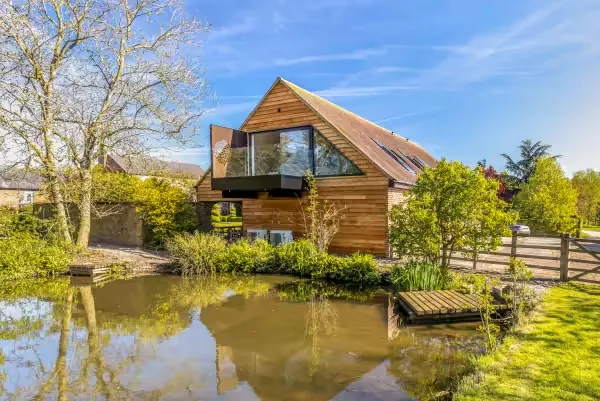
Nestled in the heart of the East Midlands, The Loft – Luxury Countryside Retreat is a beautifully converted Victorian stable that blends rustic charm with modern elegance. Set on a private 14-acre estate near Market Harborough, it provides the perfect base for festival-goers seeking peace, comfort, and style.
Why You’ll Love It:
- Scenic countryside views with walking trails and rural serenity
- Sleeps 6 + 2 infants with 2 bedrooms and 2 luxury bathrooms
- Family-ready with baby cots, high chairs, toys, and streaming via Netflix/Disney+
- Entertainment for all ages: Xbox One, board games, and a fully stocked toy chest
- Eco-friendly features, including solar power and filtered well water
- Easy access to nearby hotspots like Melton Mowbray, Leicester, Northampton, and Silverstone
Whether attending the festival or enjoying a quiet countryside escape, The Loft combines comfort, sustainability, and sophistication.
Book your stay at: luxuryharboroughloft
The Barn – Luxury Holiday Home in the East Midlands
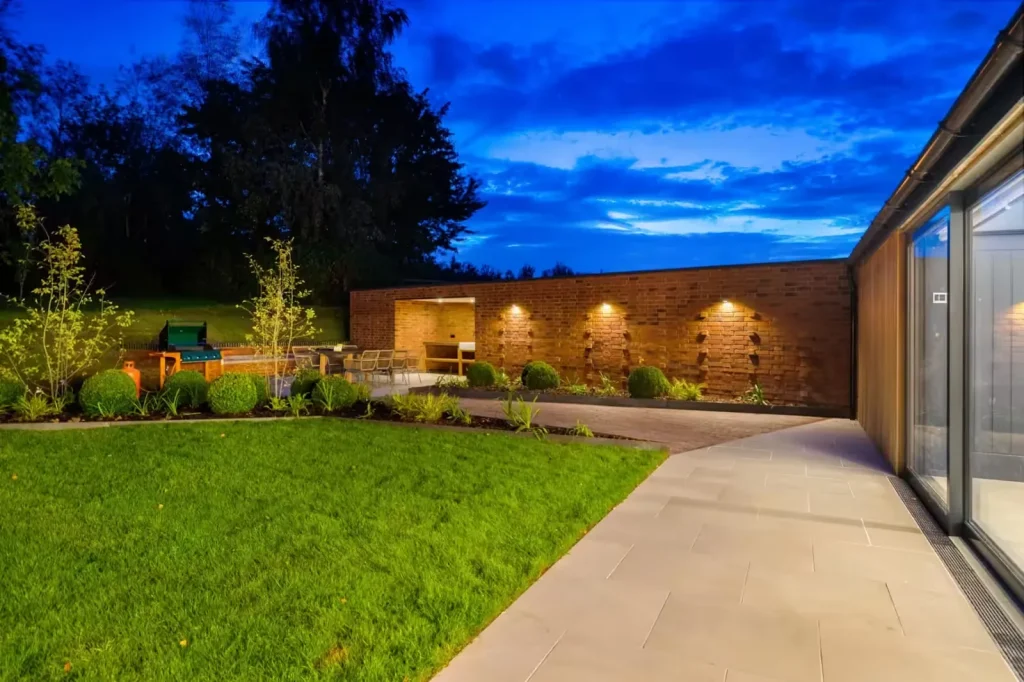
For larger groups or multi-family trips, The Barn offers a sleek, contemporary space within a private estate. With expansive living areas and stylish interiors, it balances luxury with the warmth of the countryside.
Highlights:
- Sleeps up to 8 guests + 2 infants in 3 stylish bedrooms
- 10m folding glass wall for seamless indoor-outdoor living
- Outdoor terrace, garden, gas BBQ, and a fully equipped kitchen
- Smart entertainment: 4K TVs, Netflix, Xbox, and Amazon Echo in every room
- Family-friendly amenities, including cots, high chairs, toys, and board games
- EV charger on site, fiber Wi-Fi, and USB ports for business-ready convenience
Ideal for families, friends, or anyone seeking modern luxury in a tranquil countryside setting.
Book:- Marketharboroughholdiaybarn
The Cottage – Luxury Holiday Cottage in the East Midlands

For a romantic getaway or a peaceful retreat, The Cottage provides cozy, stylish accommodation within a lovingly restored red-brick Dove Cote. Surrounded by nature and private gardens, it’s perfect for couples or small families.
Highlights:
- Accommodates up to 4 guests in 1 elegant bedroom with 1.5 bathrooms
- Luxury Hypnos mattress, blackout curtains, and underfloor heating for ultimate comfort
- 50″ Smart TV with Netflix, Xbox, and Amazon Echo for entertainment
- Private garden, filtered well water, and EV charging station
- Smart lock entry and premium linens for convenience
Perfect for couples, solo travellers, or small families seeking a romantic and quiet countryside escape near the festival.
Book:- Marketharboroughromanticcottage