


Market Harborough At A Glance
- Where: Harborough district, Leicestershire, right on the Northamptonshire border
- Market day: Tuesday, without a break since 1221
- The landmark: The Old Grammar School of 1614, raised on wooden pillars
- The church: St Dionysius, spire begun 1300, main body finished 1470
- Population: 24,779 at the 2021 census
- Getting there: Direct trains from London St Pancras in under an hour
- From our lodges: About 10 minutes by car
Market Harborough is the closest town to us, ten minutes down the road, and it is the place guests staying at The Barn end up when they want lunch, a bookshop and somewhere to walk off the afternoon. It has held a market every Tuesday since 1221, which is a long enough run to have shaped the whole shape of the place.
What makes it worth a day rather than an errand is that everything sits within a few hundred metres. The 1614 Grammar School, the church, the museum and the canal are all walkable from one car park, and Welland Park is a short stroll beyond that. This guide runs through what is actually worth your time.
A quick note on geography, because it confuses people. The town is in Leicestershire, but the Northamptonshire border runs close enough that Little Bowden was moved between the two counties in 1888.
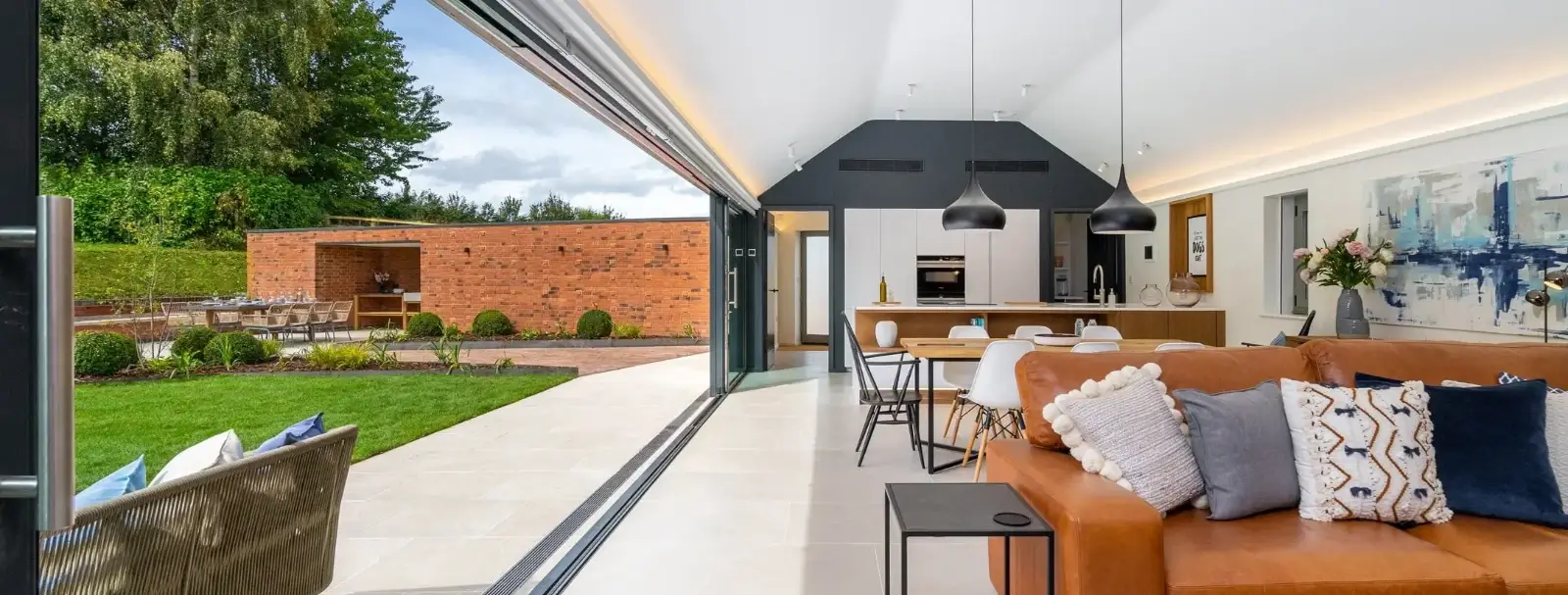
Staying nearby? Our three luxury lodges sit on a private estate 10 minutes from Market Harborough, sleeping 2 to 19 guests.
Check Availability →The Best Things to Do in Market Harborough
The town centre is compact enough that you can see the main things in a morning and still have time for lunch. What follows is ordered roughly by how close together they sit, so you can walk it as a single loop.
1. The Old Grammar School
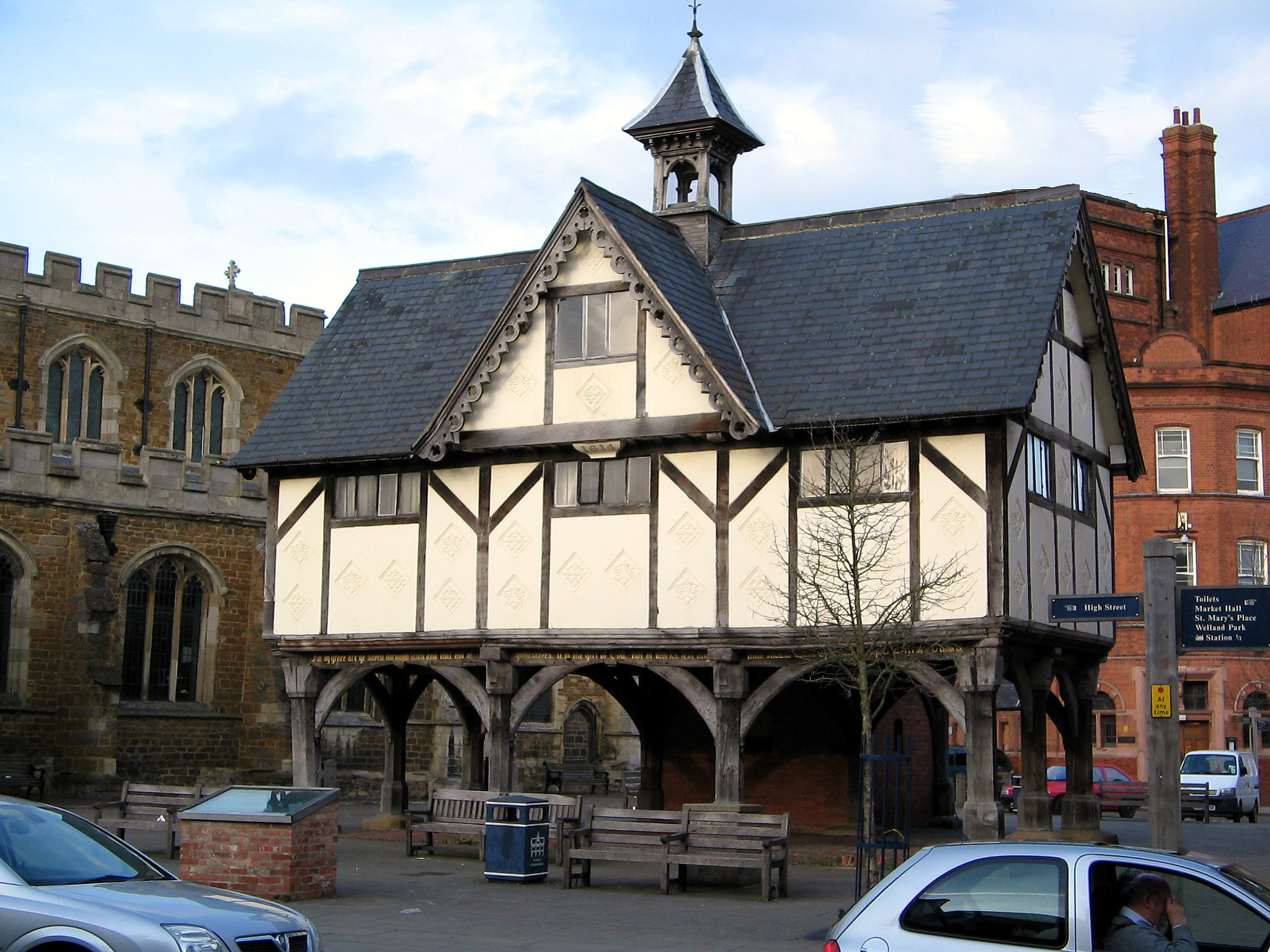
This is the building on every photograph of the town, and it has been the symbol of Market Harborough for four centuries. It is a small timber structure dating from 1614, raised up on wooden pillars so that the open ground floor forms a covered market space, with a single room above it.
That arrangement was not decorative. Traders needed somewhere dry to stand on market day and the school needed a room, so the two uses were stacked. It still works exactly as designed, and people sit under it on the benches on any dry day.
It costs nothing to look at and takes five minutes. Stand underneath it rather than photographing it from across the square, because the carpentry is the interesting part.
2. St Dionysius Church
The church stands directly beside the Grammar School, and its most unusual feature is that the steeple rises straight out of the street. There is no churchyard around it, which is rare and gives the town centre its particular look.
The spire was begun in 1300 and finished in 1320. It is a broach spire, resting on the walls of the tower rather than rising from behind a parapet, and it predates the main body of the church, which was not completed until 1470.
Entry is free and it takes fifteen minutes. If you have been to Great Bowden you can compare the two spires directly, since that one is the later recessed type.
3. Harborough Museum
The museum sits in the old Symington building opposite Church Square, and the building is half the story. William Symington started out as a grocer here in 1850 making pea flour, and his sons turned the old carpet factory into a corset works from 1876.
They put up a new factory opposite Church Square in 1884, and that is the structure now housing the council offices, the library and the museum. The corset collection is the thing people remember, and it is genuinely more interesting than it sounds.
Allow an hour. It is the best single explanation of why the town looks the way it does.
All within a few hundred metres
- The Old Grammar School and St Dionysius stand side by side
- Harborough Museum is opposite Church Square, two minutes away
- The High Street runs off the same square, with the old trade yards behind it
- The covered market hall dates from 1938 and sits at the Cattlemarket end
- Welland Park is a short walk south, towards the river
4. The Tuesday Market
A market was established here by 1204 and has run on a Tuesday continuously since 1221. That is the reason the town is called Market Harborough rather than simply Harborough.
The covered market hall at the western end of the Cattlemarket opened in 1938, replacing the stalls that used to fill the Square on Tuesdays and Saturdays. Both the indoor and outdoor trading still happen, so it is worth timing a visit for a Tuesday if you can.
Go in the morning. By mid-afternoon the best of it has gone.
5. Welland Park
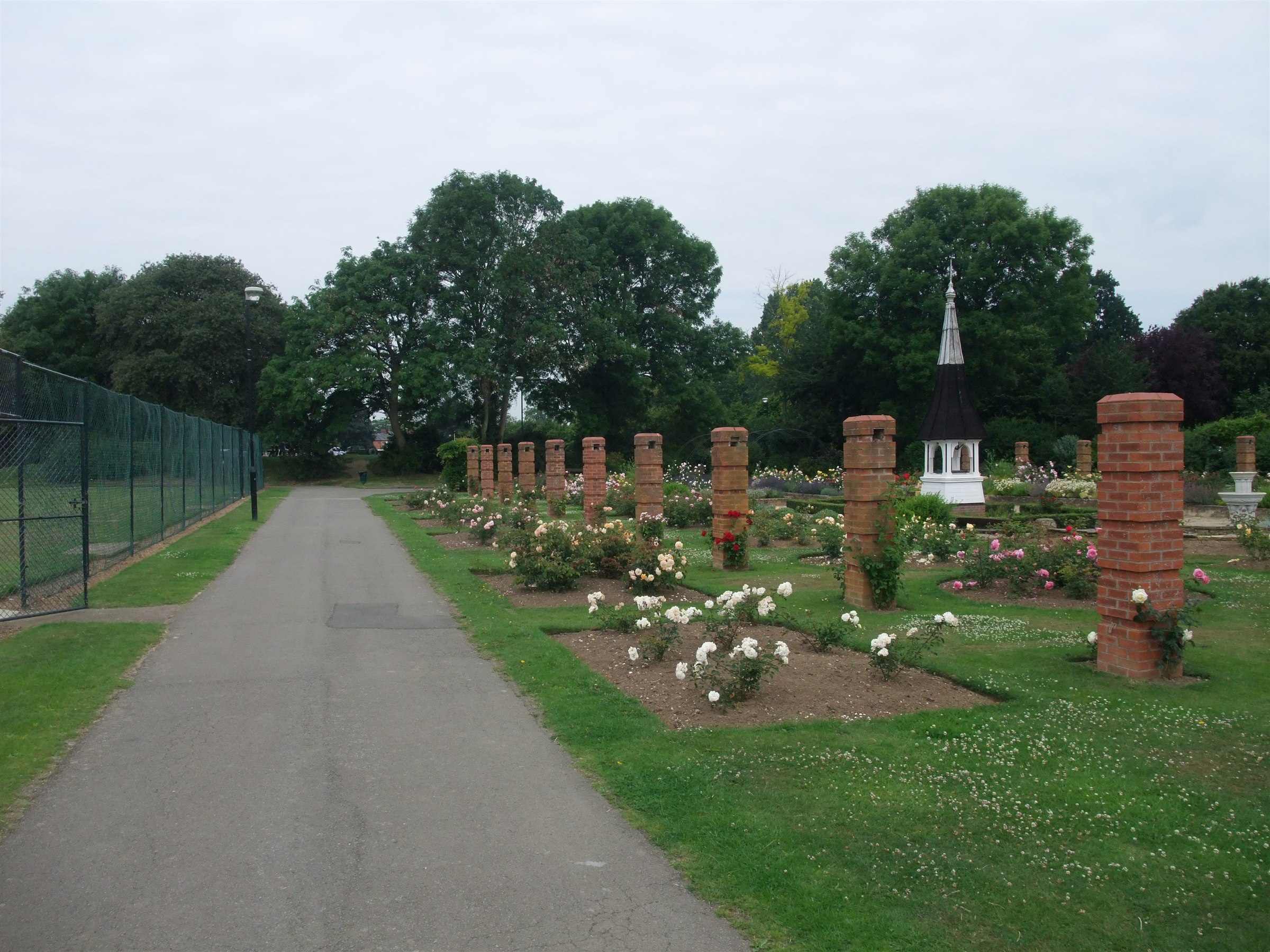
Welland Park is the town’s main green space and it sits south of the centre towards the river. The formal rose garden with its brick pillars is the part most people photograph, and there is open grass beyond it for anyone who needs to run about.
It works as the natural end point of a town walk, because you can arrive on foot from the High Street in about ten minutes and there is no charge for anything. We have written about it separately in our Welland Park guide.
With small children this is the section of the day to leave time for, since it is the only stop that does not involve standing still and looking at something.
6. The Canal and Union Wharf
The canal reached Market Harborough as a branch cut from Foxton, and the wharf north of the town became a distribution centre for coal and corn. What was industrial infrastructure is now the most pleasant flat walk in the town.
The towpath is level, surfaced and easy with a pushchair, and it takes you out of the town centre within minutes. Narrowboats are moored along it year round.
Follow it far enough and you reach Foxton, which is the outing in the next section.
7. Foxton Locks
Foxton is the reason the canal came this way at all, and the flight of ten locks is the largest staircase of its kind in the country. It is a short drive from the town and it is free to walk around.
There is a pub, a museum and a good deal of standing about watching boats work through the staircase, which takes far longer than newcomers expect. Our Foxton Locks guide covers the practical detail.
Combined with the town, this makes a full day rather than a morning.
Your Countryside Base Near Market Harborough
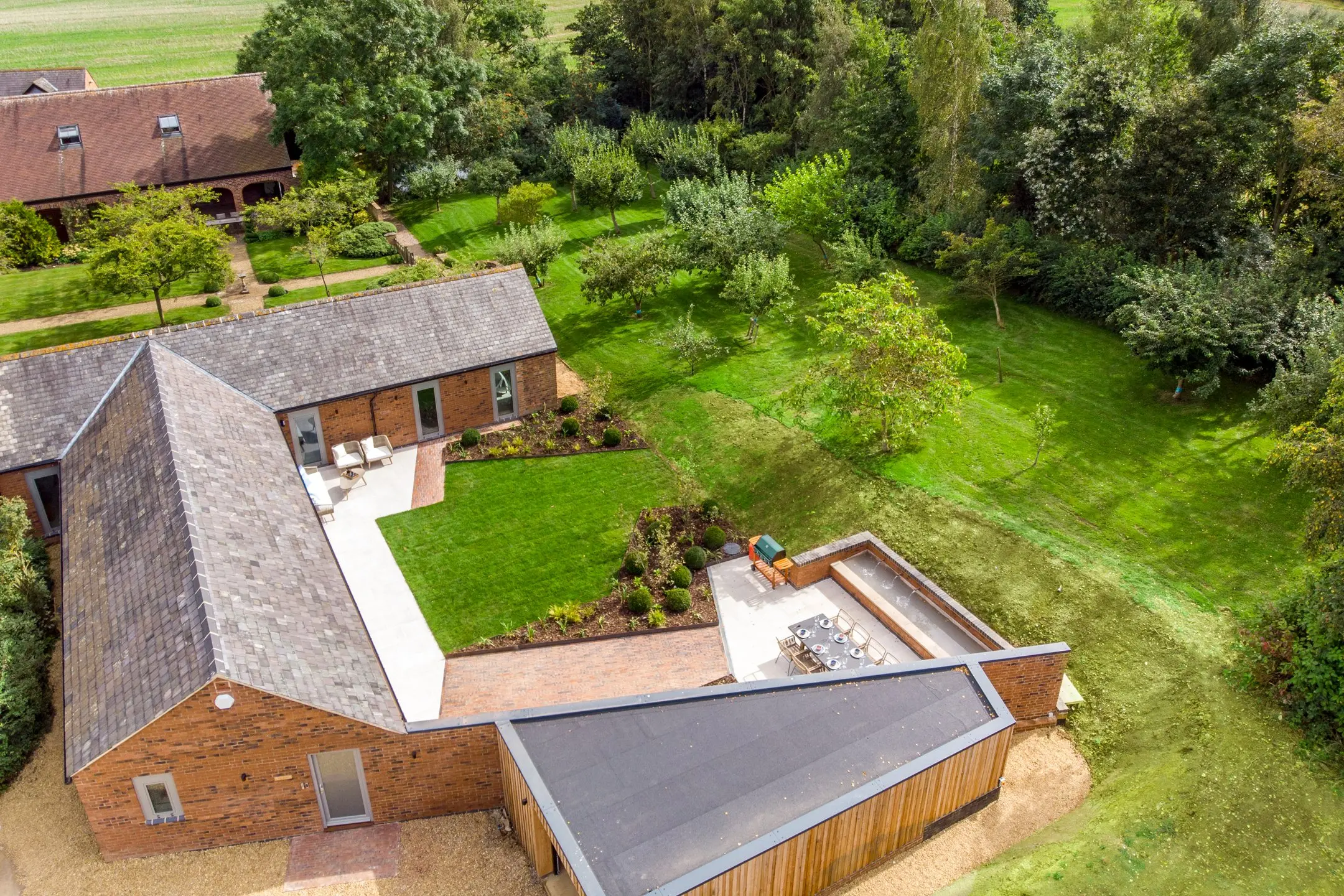
14 Acres — three luxury retreats on a private estate in Clipston
A Short History of Market Harborough
The Saxons founded the settlement somewhere between 410 and 1066, and the original name was Haefera-beorg, meaning oat hill. The Manor of Harborough first appears in the records in 1199.
It was deliberately created as a trading place. The manor was carved out with the intention of making somewhere for tradesmen and a market, and the long narrow yards behind the High Street are the surviving evidence of that. Those plots were working farmyards where goods were made and stored, later subdivided to give more frontage.
| Date | What happened |
|---|---|
| 410 to 1066 | Saxon settlement founded, named Haefera-beorg, or oat hill |
| 1199 | The Manor of Harborough is first mentioned |
| 1204 | A market is established |
| 1221 | The Tuesday market begins, and has run ever since |
| 1300 to 1320 | The spire of St Dionysius is built |
| 1470 | The main body of the church is completed |
| 1614 | The Old Grammar School is built |
| 1850 | William Symington opens a pea flour factory in the town |
| 1884 | The Symington factory opposite Church Square is built, now the museum |
| 1938 | The covered market hall opens at the Cattlemarket |
The town sat inside Rockingham Forest, a royal hunting ground whose boundaries reached all the way to Stamford and took in Corby, Kettering, Desborough, Rothwell, Thrapston and Oundle. That is worth knowing if you are also visiting Burghley House, which sits at the far end of the same old forest.
Population grew from 4,400 in 1861 to 7,700 by 1901, largely on the back of the Symington works. It stands at 24,779 today.
Great Bowden and Little Bowden: The Villages Inside the Town
Market Harborough has two villages sitting inside its own boundaries, and knowing that explains a good deal about how the place is laid out. Great Bowden lies over a hill about a mile from the town centre. Little Bowden is under half a mile out.
Both have been absorbed by ribbon development and infill over the last century, so on a map they read as suburbs. Great Bowden in particular has held on to a strong village identity despite that, and walking out to it is one of the better short outings from the centre.
The history runs the other way round from what you might expect. In the Domesday Book of 1086, Bowden was the Royal Manor, organised across 73 manors, with the population living in three villages: Great Bowden, Little Bowden and Arden. Harborough itself was carved out of that manor afterwards, deliberately, as a place for tradesmen and a market.
Arden did not survive. The village had been abandoned by 1382, though its church stayed in use for some years afterwards. Of the three original settlements, the two that remain are now part of the town that was created after them.
Worth walking out to
- Great Bowden – about 1 mile out, over the hill, still village in character
- Its church has a recessed spire, rising behind a square tower, unlike the broach spire in town
- Little Bowden – under half a mile from the centre, moved county in 1888
- Bowden Lane – a nonconformist meeting house was built here in 1694
- The old trade yards behind the High Street, now subdivided but still legible
The town was also a serious fox hunting centre in the 19th century. Mr Tailby of Skeffington Hall established a hunt in south-east Leicestershire in 1856, later renamed the Fernie, and the country between Billesdon and Harborough was considered severe because of the ox fences that had to be jumped. That history is still visible in the layout of the fields around us.
Getting to Market Harborough
The town sits at what was historically a crossroads for road and rail, though the A6 now bypasses it to the east and the A14 runs to the south. That is good news for the centre, which is quieter than its position suggests.
Market Harborough railway station is served by East Midlands Railway, and direct trains from London St Pancras take under an hour. For a town this size that is an unusually good connection, and it is the reason a fair number of our guests arrive by train and take a transfer from the station.
Practical notes
- Direct trains from London St Pancras in under 1 hour
- The A6 bypasses the town to the east, the A14 to the south
- Two villages sit within the town: Great Bowden about 1 mile out, Little Bowden under half a mile
- Little Bowden moved from Northamptonshire to Leicestershire in 1888
- Our estate at Clipston is roughly a 10 minute drive

A Note from Susan
“Go on a Tuesday if you possibly can, because the market is the whole point of the town and it has been running on that day since 1221. Park once near the Square, do the Grammar School and the church, then walk down to Welland Park and back up through the yards behind the High Street. It is ten minutes from our gate, so guests often go twice in a week and find something different both times.”
— Susan, Founder of Espais Roca
More to Explore Near Our Estate
Market Harborough is the closest town, but it is far from the only outing. Pitsford Reservoir is about 20 minutes away for a longer walk, and our guide to the best restaurants near Clipston covers where to eat closer to home. The Cottage is the lodge couples usually choose for a short town-and-countryside break.
“Had a lovely stay with my sisters to celebrate a special birthday. Susan was very thoughtful to leave me a birthday card and chocolates. You are welcomed by relaxing music playing throughout the loft, and a wonderful view. The kitchen has everything you need. Well thought through and modern space. You do need the car to get to local amenities – we had a lovely lunch and shopping in local town, market harborough, and some nice walks nearby (all within a short driving distance). Would recommend.”
Nargess
Frequently Asked Questions
What Is There To Do In Market Harborough?
The main sights sit within a few hundred metres of each other: the Old Grammar School of 1614, St Dionysius Church, Harborough Museum and the Tuesday market. Welland Park is a 10 minute walk south, and the canal towpath runs north out of the town. Most visitors need about half a day.
When Is Market Harborough Market?
The market has been held on a Tuesday continuously since 1221, and a market was first established here by 1204. The covered market hall at the Cattlemarket end opened in 1938 and replaced the outdoor stalls that filled the Square. Go in the morning for the best of it.
Is Market Harborough Worth Visiting?
Yes, particularly on a Tuesday. It is a working market town of nearly 25,000 people rather than a preserved tourist site, and the historic core is compact enough to see in a morning. The 1614 Grammar School alone justifies the trip.
How Old Is The Old Grammar School?
It dates from 1614, which makes it over 400 years old. It is a small timber building raised on wooden pillars so the open ground floor could serve as a covered market area, with a single schoolroom on the first floor. It has become the symbol of the town.
Where Is Harborough Museum?
The museum is in the old Symington building opposite Church Square, alongside the council offices and the library. The factory was built in 1884 by the family who had been making corsets in the town since 1876. Allow about an hour for a visit.
Is Market Harborough In Leicestershire Or Northamptonshire?
Leicestershire. It is the administrative headquarters of the Harborough district, though it sits very close to the Northamptonshire border. Little Bowden, now part of the town, was transferred from Northamptonshire to Leicestershire in 1888.
What Is Market Harborough Known For?
Three things: the Tuesday market running since 1221, the Old Grammar School of 1614, and the Symington corset industry that shaped the town from 1876 onwards. It was also a centre for fox hunting in the 19th century, home to the Fernie hunt.
How Do You Get To Market Harborough By Train?
Market Harborough station is served by East Midlands Railway, with direct trains from London St Pancras taking under 1 hour. The A6 bypasses the town to the east and the A14 runs to the south, so driving is straightforward too.
Are There Good Walks Near Market Harborough?
Yes. The canal towpath north of the town is level and surfaced and leads towards Foxton Locks, a flight of 10 locks. Welland Park offers an easy circuit within the town, and Pitsford Reservoir has a 7-mile track about 20 minutes away by car.
Ten Minutes from the Square
Three luxury lodges on a private Northamptonshire estate, sleeping 2 to 19 guests, with a private chef and spa treatments available.
Check AvailabilityImage credits: Old Grammar School by G-Man, public domain. Welland Park rose garden by Tim Heaton, CC BY-SA 2.0, via Wikimedia Commons. Historical detail from the Market Harborough entry on Wikipedia.